Medical Disclaimer: This is educational content only, not medical advice. Consult a licensed healthcare provider for diagnosis/treatment. Information based on sources like WHO/CDC guidelines (last reviewed: 2026-02-13).
This article is being expanded for more depth. Check back soon!
Crohn’s Disease Complete Guide Causes Symptoms Diagnosis and Treatment
Frequently Asked Questions
What is Crohn’s disease?
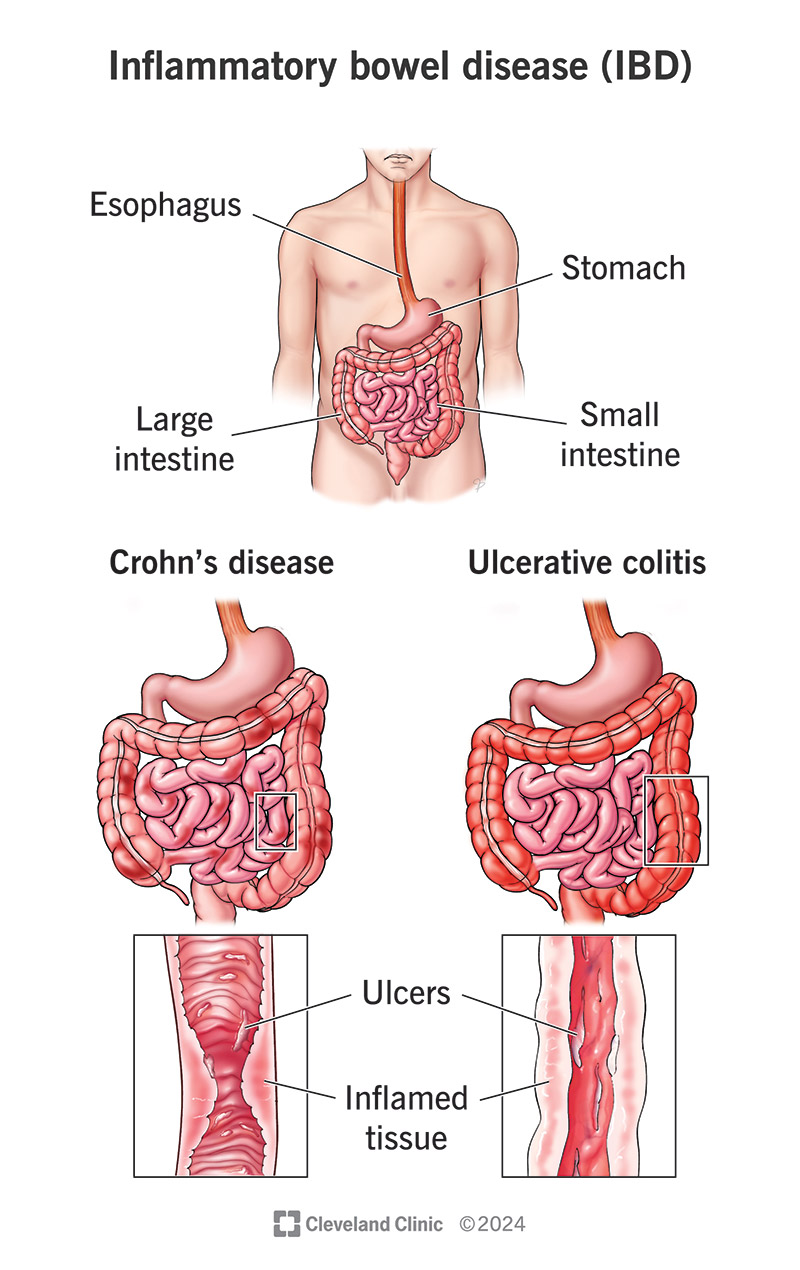
Crohn’s disease is a chronic inflammatory bowel disease characterized by transmural inflammation that can affect any part of the gastrointestinal tract from mouth to anus, most commonly the terminal ileum and colon.
What causes Crohn’s disease?
Crohn’s disease is caused by a combination of genetic susceptibility, immune system dysregulation, environmental factors, and abnormal response to gut microbiota.
What are the common symptoms of Crohn’s disease?
Common symptoms include chronic diarrhea, abdominal pain, weight loss, fatigue, fever, and in some cases blood in stool.
How is Crohn’s disease different from ulcerative colitis?
Crohn’s disease causes skip lesions and transmural inflammation and can affect the entire GI tract, while ulcerative colitis causes continuous mucosal inflammation limited to the colon.
Which part of the intestine is most commonly affected in Crohn’s disease?
The terminal ileum is the most commonly affected site, followed by the colon.
What complications can occur in Crohn’s disease?
Complications include strictures, fistulas, abscesses, intestinal obstruction, malabsorption, and increased risk of colorectal and small bowel cancer.
How is Crohn’s disease diagnosed?
Diagnosis is based on clinical features, laboratory markers of inflammation, endoscopy with biopsy, and imaging such as CT or MR enterography.
What is the role of colonoscopy in Crohn’s disease?
Colonoscopy allows visualization of skip lesions, ulcers, cobblestone mucosa, and enables biopsy to confirm transmural inflammation and granulomas.
Can Crohn’s disease be cured?
There is no cure for Crohn’s disease. Treatment aims to induce and maintain remission and prevent complications.
Which medications are used to treat Crohn’s disease?
Treatment includes corticosteroids for flares, immunomodulators like azathioprine, biologics such as anti-TNF agents, and supportive therapies.
When are biologic drugs indicated in Crohn’s disease?
Biologics are indicated in moderate to severe disease, steroid-dependent cases, and fistulizing Crohn’s disease.
Why is smoking harmful in Crohn’s disease?
Smoking worsens disease severity, increases relapse rates, and raises the likelihood of surgery.
What extraintestinal manifestations are seen in Crohn’s disease?
Extraintestinal manifestations include arthritis, erythema nodosum, uveitis, ankylosing spondylitis, and kidney stones.
Is surgery curative in Crohn’s disease?
Surgery is not curative. It is used to manage complications such as strictures, fistulas, abscesses, or refractory disease.
What dietary changes help in Crohn’s disease?
During flares, a low-residue diet may help. Nutritional supplementation is important, especially for vitamin B12, iron, and vitamin D.
What long-term risks are associated with Crohn’s disease?
Long-term risks include malnutrition, growth failure in children, chronic anemia, and increased risk of intestinal malignancy.
MCQ Test - Crohn’s Disease Complete Guide Causes Symptoms Diagnosis and Treatment
Progress:
0/15
Time: 00:00
Test Results
0%
0/15
0
Correct Answers
0
Wrong Answers
00:00
Time Taken
0
Skipped