Medical Disclaimer: This is educational content only, not medical advice. Consult a licensed healthcare provider for diagnosis/treatment. Information based on sources like WHO/CDC guidelines (last reviewed: 2026-02-13).
This article is being expanded for more depth. Check back soon!
Cough Syrup Uses Benefits Types Side Effects Dosage and Safety Guide
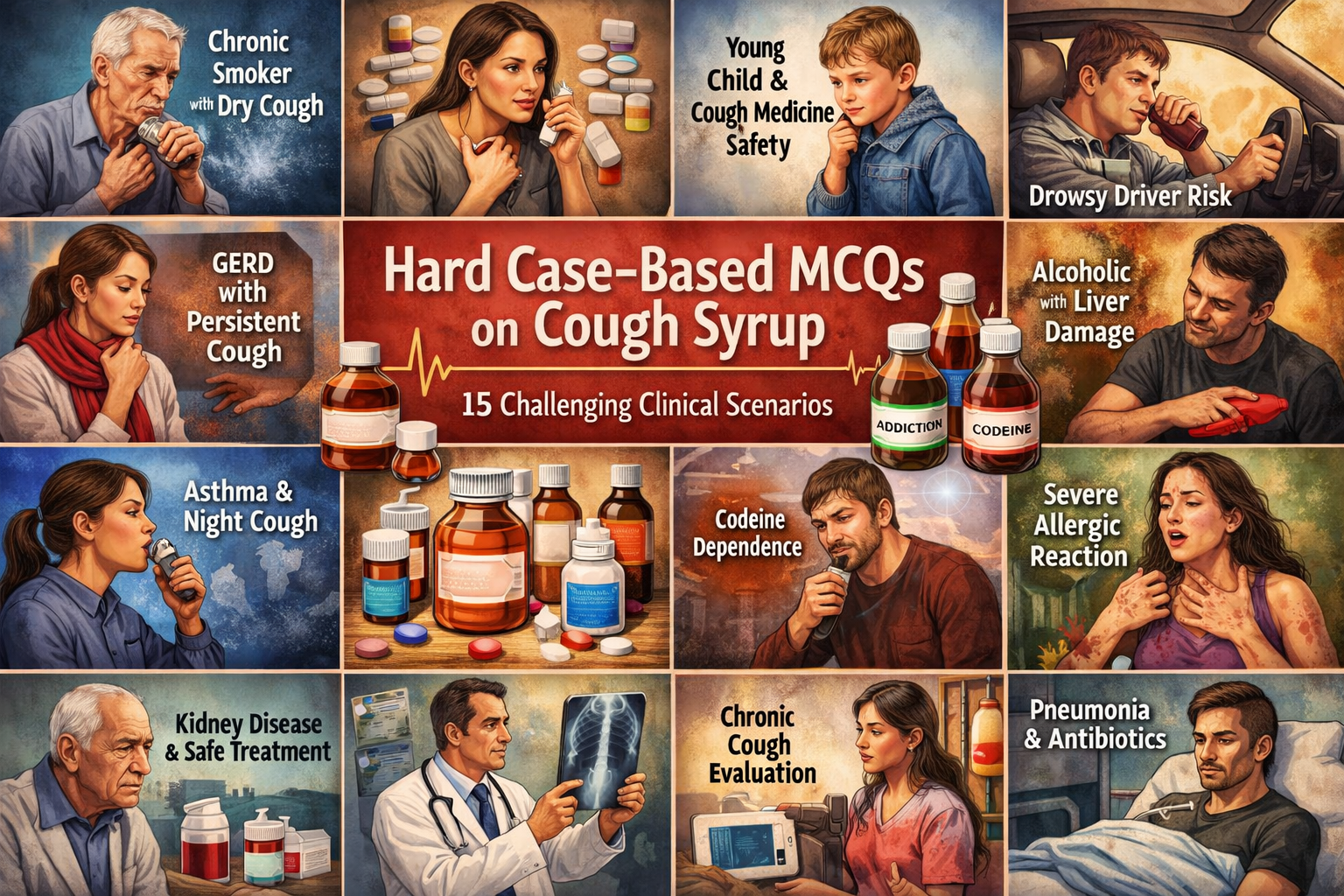
Frequently Asked Questions
What is cough syrup?
Cough syrup is a liquid medication used to relieve cough by suppressing the cough reflex or loosening mucus in the airways.
What are the main types of cough syrup?
The main types include antitussives (dry cough suppressants), expectorants (mucus loosening), mucolytics (mucus thinning), antihistamine-based syrups (allergic cough), and bronchodilator syrups (asthma-related cough).
Which cough syrup is best for dry cough?
Dry cough is best treated with antitussive agents such as dextromethorphan or codeine, which suppress the cough reflex.
Which cough syrup is best for wet cough with mucus?
Wet cough is best treated with expectorants like guaifenesin or mucolytics like ambroxol and bromhexine to loosen and clear mucus.
Can children take cough syrup safely?
Cough syrups should not be given to young children unless prescribed by a doctor due to safety concerns and risk of side effects.
Is cough syrup safe during pregnancy?
Many cough syrups are not recommended during pregnancy. A doctor should be consulted before using any medication.
What are common side effects of cough syrup?
Common side effects include drowsiness, dizziness, nausea, dry mouth, and gastrointestinal upset.
Can cough syrup cause drowsiness?
Yes, cough syrups containing antihistamines or opioids often cause sedation and reduced alertness.
Can cough syrup be addictive?
Codeine-containing and dextromethorphan-containing cough syrups may be addictive if misused or taken in high doses.
How long should cough syrup be used?
Cough syrup should generally not be used for more than 1–2 weeks without medical evaluation, especially if cough persists.
When should a doctor be consulted for cough?
A doctor should be consulted if cough lasts more than 3 weeks, produces blood, is associated with fever, chest pain, breathlessness, or weight loss.
Can cough syrup interact with other medications?
Yes, cough syrup may interact with antidepressants, sedatives, alcohol, and other central nervous system depressants.
Is it safe to drink alcohol while taking cough syrup?
No, alcohol can increase drowsiness and risk of dangerous side effects when combined with cough syrup.
Can cough syrup be used for asthma-related cough?
Asthma-related cough should be treated with bronchodilators and inhalers rather than only cough suppressants.
Why should productive cough not always be suppressed?
Productive cough helps clear mucus and infections from the lungs, so suppressing it may worsen the condition.
Can cough syrup be taken for chronic cough?
Chronic cough should be investigated for underlying causes such as GERD, asthma, or infection rather than only treated with syrup.
What ingredients in cough syrup loosen mucus?
Guaifenesin, ambroxol, and bromhexine help loosen and thin mucus for easier expectoration.
What should be avoided while taking cough syrup?
Avoid alcohol, driving heavy vehicles if drowsy, exceeding recommended dosage, and mixing with sedative drugs.
Can cough syrup cause allergic reactions?
Yes, some individuals may experience rash, itching, swelling, or breathing difficulty due to drug allergy.
Are natural remedies effective for cough?
Warm fluids, honey (for adults), steam inhalation, and saltwater gargles can provide supportive relief but may not replace medication.
MCQ Test - Cough Syrup Uses Benefits Types Side Effects Dosage and Safety Guide
Progress:
0/15
Time: 00:00
Test Results
0%
0/15
0
Correct Answers
0
Wrong Answers
00:00
Time Taken
0
Skipped