Medical Disclaimer: This is educational content only, not medical advice. Consult a licensed healthcare provider for diagnosis/treatment. Information based on sources like WHO/CDC guidelines (last reviewed: 2026-02-13).
Cerebellum Anatomy Structure Functions and Clinical Importance
Frequently Asked Questions
What is the cerebellum?
The cerebellum is a part of the hindbrain responsible for coordination of voluntary movements, maintenance of balance and posture, regulation of muscle tone, and motor learning.
Where is the cerebellum located?
The cerebellum is located in the posterior cranial fossa, behind the pons and medulla, and below the occipital lobes of the cerebrum.
What are the main anatomical parts of the cerebellum?
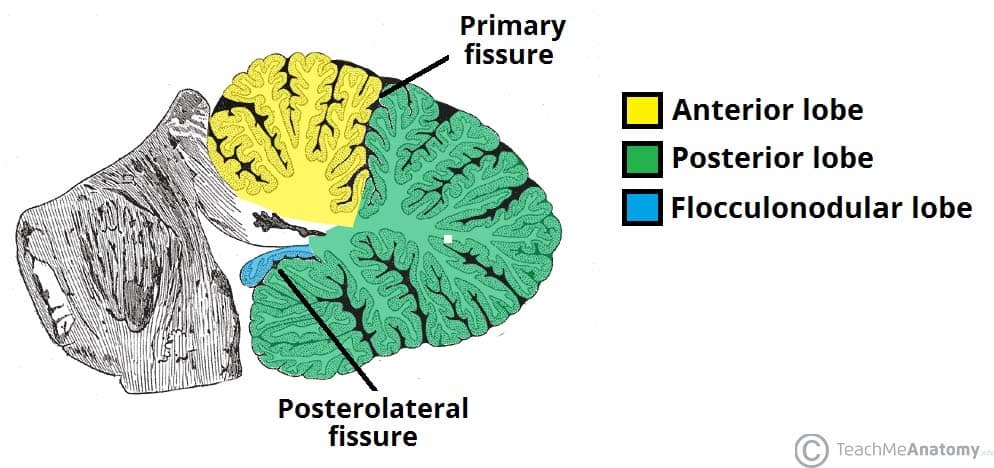
The cerebellum consists of two hemispheres connected by a central vermis and is divided into anterior, posterior, and flocculonodular lobes.
What are the functional divisions of the cerebellum?
The functional divisions are the cerebrocerebellum, spinocerebellum, and vestibulocerebellum, each responsible for different aspects of motor control.
What is the function of the vermis?
The vermis controls axial muscles and is mainly involved in maintaining posture and coordinating movements of the trunk.
Which cerebellar part is responsible for balance and eye movements?
The flocculonodular lobe, also known as the vestibulocerebellum, is responsible for balance and coordination of eye movements.
What are the layers of the cerebellar cortex?
The cerebellar cortex has three layers: molecular layer, Purkinje cell layer, and granular layer.
What is the role of Purkinje cells?
Purkinje cells are the main output neurons of the cerebellar cortex and provide inhibitory signals to the deep cerebellar nuclei.
What is arbor vitae?
Arbor vitae refers to the tree-like appearance of cerebellar white matter seen in sagittal section.
What are the deep cerebellar nuclei?
The deep cerebellar nuclei are dentate, emboliform, globose, and fastigial nuclei, which act as major output centers of the cerebellum.
How does the cerebellum connect to the brainstem?
The cerebellum connects to the brainstem through three cerebellar peduncles: superior, middle, and inferior cerebellar peduncles.
Which cerebellar peduncle carries mainly afferent fibers?
The middle cerebellar peduncle carries mainly afferent fibers from the pontine nuclei to the cerebellum.
What is the blood supply of the cerebellum?
The cerebellum is supplied by the superior cerebellar artery, anterior inferior cerebellar artery, and posterior inferior cerebellar artery.
What are common clinical signs of cerebellar lesions?
Common signs include ataxia, dysmetria, intention tremor, nystagmus, hypotonia, and scanning speech.
Why do cerebellar lesions produce ipsilateral signs?
Cerebellar signs are ipsilateral because cerebellar pathways cross twice before influencing motor output.
MCQ Test - Cerebellum Anatomy Structure Functions and Clinical Importance
Progress:
0/0
Time: 00:00
No MCQs available for this article.