Medical Disclaimer: This is educational content only, not medical advice. Consult a licensed healthcare provider for diagnosis/treatment. Information based on sources like WHO/CDC guidelines (last reviewed: 2026-02-13).
This article is being expanded for more depth. Check back soon!
Breast Anatomy Detailed Structure Blood Supply Lymphatic Drainage Clinical Correlation
Frequently Asked Questions
What is the breast?
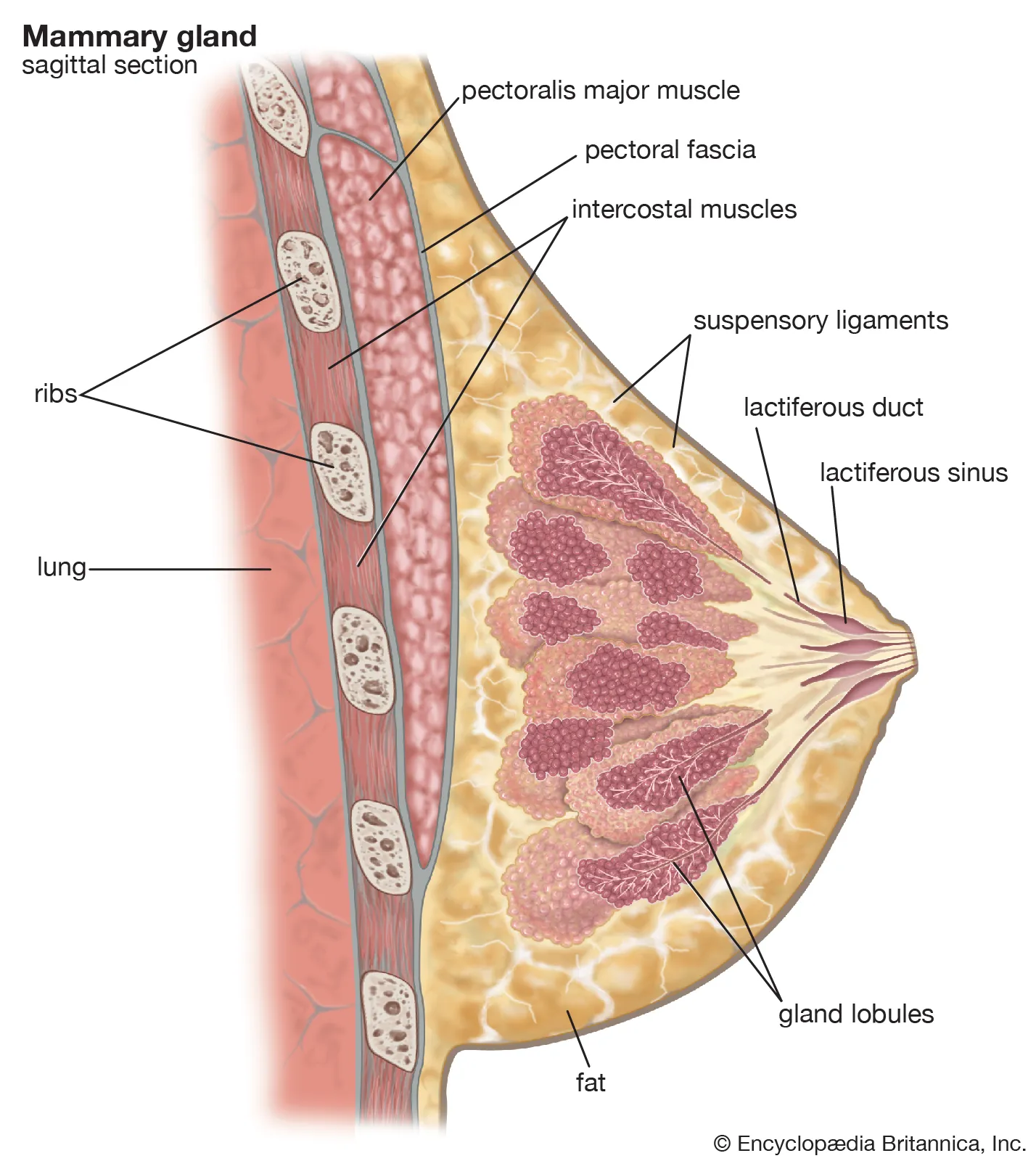
The breast is a modified apocrine sweat gland, also known as the mammary gland, specialized for milk production and lactation in females.
Where is the breast anatomically located?
The breast lies in the superficial fascia of the anterior chest wall, extending from the 2nd to the 6th rib and from the lateral border of the sternum to the mid-axillary line.
What is the axillary tail of the breast?
The axillary tail, also called the Tail of Spence, is a lateral extension of breast tissue into the axilla and is clinically important in breast cancer spread.
How many lobes are present in a normal breast?
A normal adult breast contains approximately 15–20 lobes arranged radially around the nipple.
What are Cooper’s ligaments?
Cooper’s ligaments are fibrous connective tissue bands that extend from the skin to the deep fascia, helping maintain the shape and structural integrity of the breast.
What is the primary function of the nipple?
The nipple contains openings of lactiferous ducts and serves as the exit point for milk during lactation.
Which tissue is absent beneath the nipple and areola?
Adipose (fat) tissue is absent beneath the nipple and areola.
What is the main arterial supply of the breast?
The breast receives blood from the internal thoracic artery, lateral thoracic artery, thoracoacromial artery, and posterior intercostal arteries.
What is the major lymphatic drainage pathway of the breast?
Approximately 75% of breast lymph drains into the axillary lymph nodes, especially the anterior (pectoral) group.
What is Sappey’s plexus?
Sappey’s plexus is a subareolar lymphatic network that plays a key role in lymph drainage from the nipple and areola.
Which nerve supplies sensation to the nipple?
The nipple is mainly supplied by the fourth intercostal nerve (T4).
What is the retromammary space?
The retromammary space is a loose connective tissue plane between the breast and pectoral fascia that allows free mobility of the breast.
From which embryological structure does the breast develop?
The breast develops from the mammary ridge, also known as the milk line.
What is polymastia?
Polymastia refers to the presence of accessory breast tissue, usually occurring along the milk line.
What hormonal changes occur in the breast during pregnancy?
During pregnancy, estrogen promotes ductal growth while progesterone stimulates lobuloalveolar development.
Which hormone is responsible for milk secretion?
Prolactin is responsible for milk production in the alveoli of the breast.
Which hormone causes milk ejection?
Oxytocin causes contraction of myoepithelial cells leading to milk ejection.
Why does breast carcinoma spread easily?
Breast carcinoma spreads easily due to rich lymphatic drainage and absence of a well-defined deep fascial barrier.
What causes peau d’orange appearance in breast cancer?
Peau d’orange occurs due to lymphatic obstruction leading to skin edema and pitting.
What is gynecomastia?
Gynecomastia is the benign enlargement of male breast tissue due to hormonal imbalance, particularly increased estrogen activity.
MCQ Test - Breast Anatomy Detailed Structure Blood Supply Lymphatic Drainage Clinical Correlation
Progress:
0/0
Time: 00:00
No MCQs available for this article.