This article is being expanded for more depth. Check back soon!

Snake Bite Clinical Features Diagnosis and Management Guide
Author: Medical Editorial Team – Board-certified physicians with 10+ years in emergency medicine. Learn more.

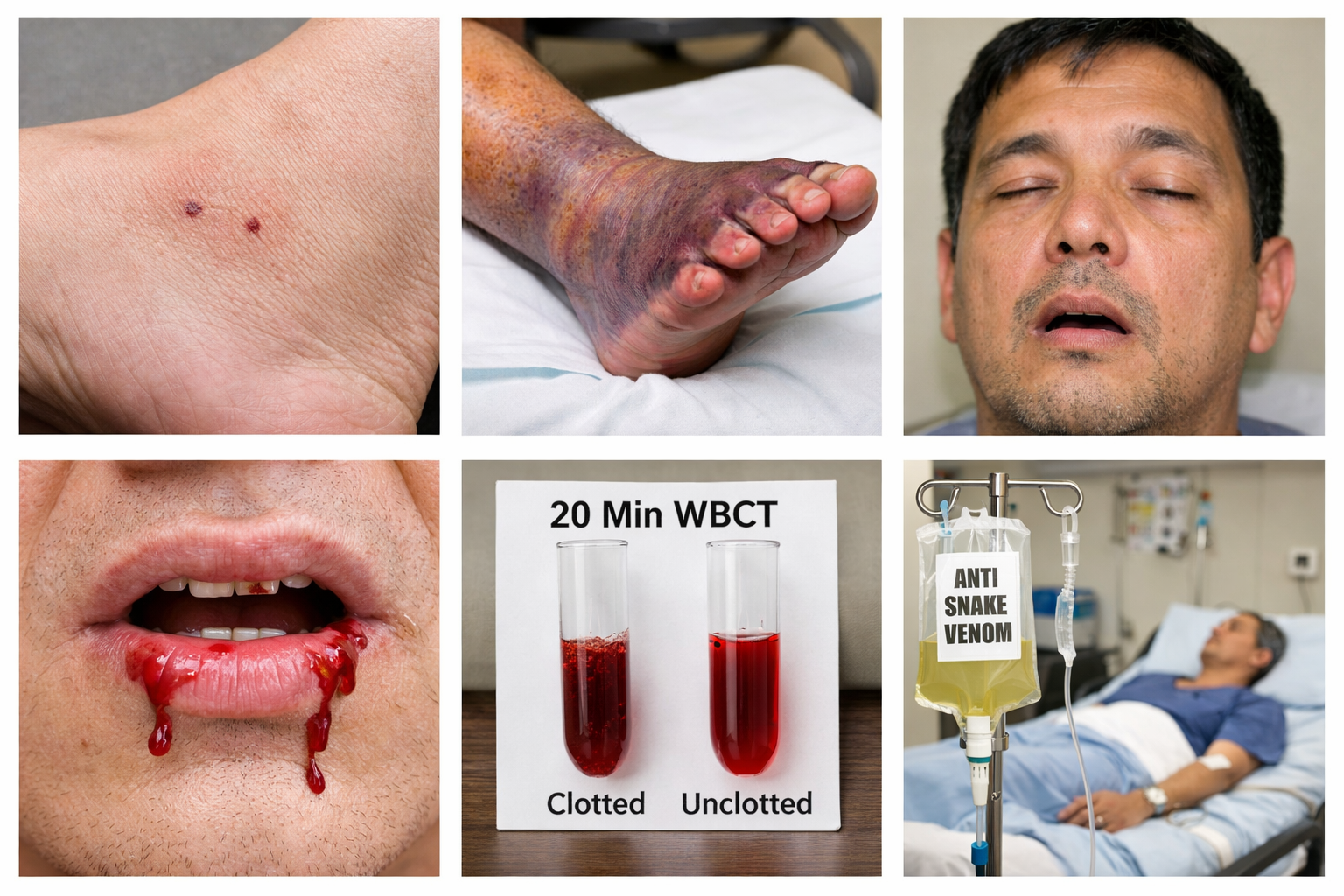
Illustration of Snake Bite Clinical Features Diagnosis and Management Guide symptoms

Medical Disclaimer: This is educational content only, not medical advice. Consult a licensed healthcare provider for diagnosis/treatment. Information based on sources like WHO/CDC guidelines (last reviewed: 2026-02-13).

About the Author: Dr. Dinesh, MBBS, is a qualified medical doctor with over [2 years – add your experience] of experience in general medicine As the owner and lead content creator of LearnWithTest.pro, Dr. Dinesh ensures all articles are based on evidence-based guidelines from sources like WHO, CDC, and peer-reviewed journals. This content is for educational purposes only and not a substitute for professional medical advice.

Contact Details: For inquiries or collaborations, reach out at:

All content is reviewed for accuracy and updated regularly (last review: January 10, 2026). We prioritize trustworthiness by citing reliable sources and adhering to medical ethics.

Frequently Asked Questions

What is a snake bite?

A snake bite is an injury caused by the bite of a snake that may result in envenomation (venom injection) or may be a dry bite without venom injection.

What are the common venomous snakes responsible for snake bites in India?

The common venomous snakes in India are known as the Big Four: cobra, krait, Russell’s viper, and saw-scaled viper.

What are the main types of snake venom?

The main types of snake venom are neurotoxic, hemotoxic (vasculotoxic), myotoxic, cytotoxic, and mixed venom.

What are the early signs of neurotoxic snake bite?

Early signs include ptosis, blurred vision, difficulty speaking, difficulty swallowing, and progressive muscle weakness leading to respiratory failure.

What are the features of hemotoxic snake bite?

Hemotoxic snake bite causes bleeding from gums or wounds, incoagulable blood, bruising, hypotension, shock, and acute kidney injury.

What is a dry bite?

A dry bite is a snake bite in which no venom is injected, resulting in minimal or no local and systemic signs of envenomation.

What is the 20-minute whole blood clotting test?

The 20-minute whole blood clotting test is a bedside test used to detect hemotoxic envenomation by assessing whether blood clots normally within 20 minutes.

What are the indications for anti-snake venom administration?

Indications include neuroparalysis, spontaneous bleeding, incoagulable blood on 20WBCT, rapidly progressive swelling, shock, and acute kidney injury.

What is the role of anti-snake venom in snake bite management?

Anti-snake venom neutralizes circulating free venom and prevents progression of systemic toxicity but does not reverse established tissue damage.

What are common adverse reactions to anti-snake venom?

Common adverse reactions include anaphylaxis, fever, chills, urticaria, and delayed serum sickness occurring days after administration.

What is the most important cause of death in neurotoxic snake bite?

Respiratory failure due to paralysis of respiratory muscles is the most important cause of death.

Is anti-snake venom safe in pregnancy and children?

Yes, anti-snake venom is safe and life-saving in pregnancy and children, and the dose is the same as in adults.

Why should tourniquets not be used in snake bite?

Tourniquets can cause ischemia and sudden release may lead to rapid systemic venom absorption causing shock and worsening toxicity.

How long should a suspected dry bite be observed?

A suspected dry bite should be observed for at least 24 hours to ensure no delayed signs of envenomation develop.

What factors worsen prognosis in snake bite?

Delayed hospital presentation, delayed anti-snake venom administration, severe envenomation, respiratory failure, and acute kidney injury worsen prognosis.

MCQ Test - Snake Bite Clinical Features Diagnosis and Management Guide

Progress:
0/15
Time: 00:00

1 A 30-year-old farmer presents 3 hours after a snake bite with bilateral ptosis, dysphagia, and shallow breathing. Local swelling is minimal and 20WBCT is normal. What is the most appropriate immediate management?

Explanation:

Neurotoxic envenomation is suggested by ptosis and bulbar weakness with normal coagulation. ASV and early airway protection are crucial.

2 A patient bitten by a viper presents with bleeding from venepuncture sites and an incoagulable 20WBCT. After 10 vials of ASV, blood remains incoagulable. What is the next best step?

Explanation:

Persistent coagulopathy indicates ongoing circulating venom and requires additional ASV.

3 A snake bite patient develops hypotension, urticaria, and wheezing 15 minutes after starting ASV infusion. What is the most appropriate immediate treatment?

Explanation:

This is anaphylaxis due to ASV. Intramuscular adrenaline is life-saving.

4 A patient presents 12 hours after snake bite with oliguria, hematuria, and rising serum creatinine. Which venom effect is primarily responsible?

Explanation:

Vasculotoxic venom causes acute kidney injury due to DIC, hemolysis, and renal ischemia.

5 A krait bite victim is found unconscious early morning with severe respiratory paralysis but no local swelling. What feature best distinguishes krait bite from cobra bite?

Explanation:

Krait bites typically cause minimal local signs but profound neurotoxicity.

6 A patient with snake bite has tense limb swelling, severe pain, paresthesia, and reduced distal pulses. What is the most likely diagnosis?

Explanation:

These features are classical for compartment syndrome, a limb-threatening complication.

7 A snake bite patient presents with muscle pain, cola-colored urine, and elevated creatine kinase levels. Which complication is most likely?

Explanation:

Myotoxic envenomation causes muscle breakdown leading to rhabdomyolysis.

8 A patient presents with suspected snake bite but no visible fang marks. He develops spontaneous bleeding and AKI. Which bedside test helps confirm diagnosis?

Explanation:

20WBCT is a simple and reliable bedside test for hemotoxic envenomation.

9 A snake bite victim has normal examination initially but develops bleeding 6 hours later. What does this indicate?

Explanation:

Hemotoxic effects can be delayed; repeated assessment is essential.

10 A pregnant woman presents with confirmed venomous snake bite. What is the correct approach?

Explanation:

ASV is safe in pregnancy and should be given when indicated to save maternal life.

11 A child with neurotoxic snake bite shows no improvement after ASV but improves after neostigmine. What does this suggest?

Explanation:

Response to neostigmine suggests postsynaptic blockade as seen in cobra bite.

12 A snake bite patient develops fever, rash, and arthralgia 8 days after ASV administration. What is the diagnosis?

Explanation:

Serum sickness is a delayed immune reaction occurring 5–10 days after ASV.

13 Which factor is the strongest predictor of mortality in snake bite victims?

Explanation:

Delay in ASV administration significantly increases mortality.

14 A snake bite victim arrives with a tight tourniquet applied for several hours. What is the most dangerous consequence after release?

Explanation:

Tourniquet release can cause rapid venom dissemination leading to shock.

15 A patient presents 24 hours after snake bite with no symptoms, normal coagulation, and stable vitals. What is the best diagnosis?

Explanation:

Absence of systemic features after 24 hours strongly suggests a dry bite.

Test Results

0%
0/15
0
Correct Answers
0
Wrong Answers
00:00
Time Taken
0
Skipped
View Exam Mode MCQs (1767683279-index-2026-01-06T123445.146.html)

Related Articles

Comments