This article is being expanded for more depth. Check back soon!

Malpresentation in Pregnancy Causes Types Diagnosis and Management
Author: Medical Editorial Team – Board-certified physicians with 10+ years in emergency medicine. Learn more.

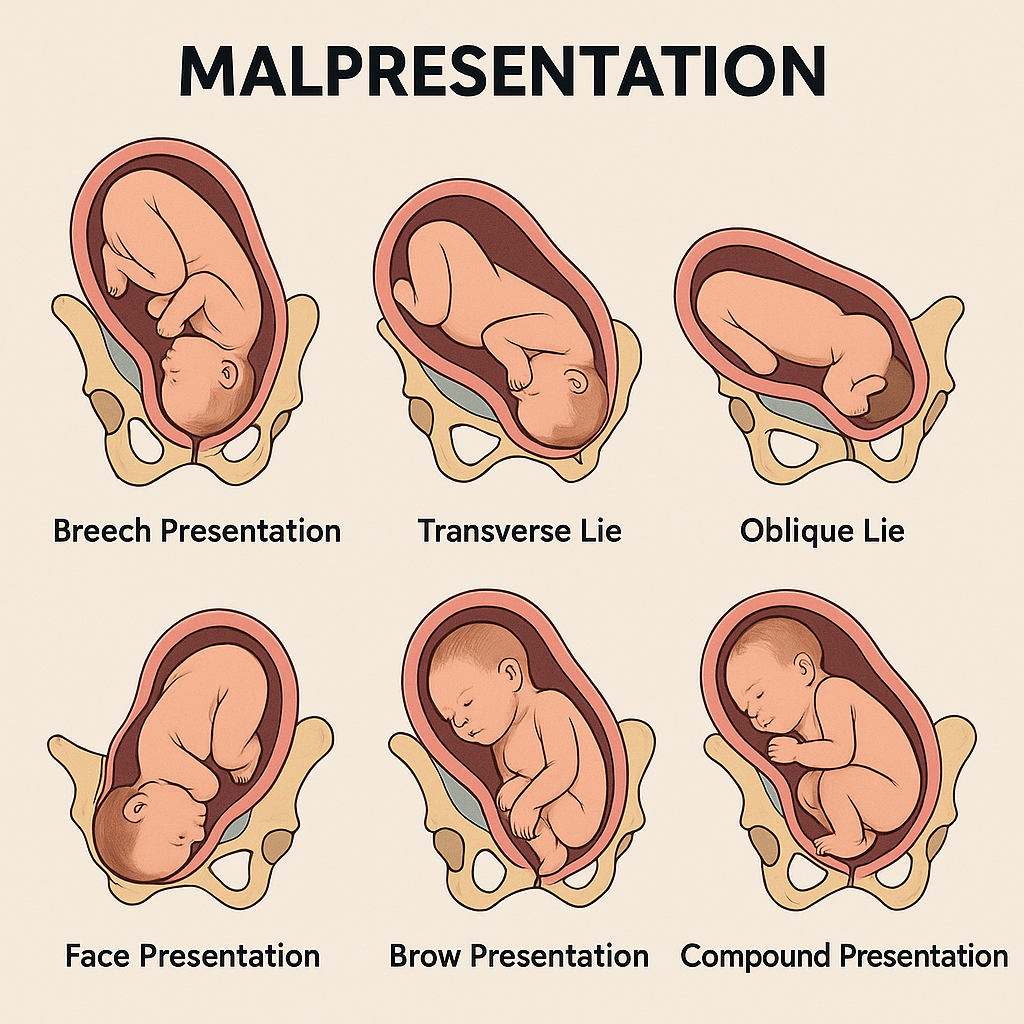
Illustration of Malpresentation in Pregnancy Causes Types Diagnosis and Management symptoms

Medical Disclaimer: This is educational content only, not medical advice. Consult a licensed healthcare provider for diagnosis/treatment. Information based on sources like WHO/CDC guidelines (last reviewed: 2026-02-13).

About the Author: Dr. Dinesh, MBBS, is a qualified medical doctor with over [2 years – add your experience] of experience in general medicine As the owner and lead content creator of LearnWithTest.pro, Dr. Dinesh ensures all articles are based on evidence-based guidelines from sources like WHO, CDC, and peer-reviewed journals. This content is for educational purposes only and not a substitute for professional medical advice.

Contact Details: For inquiries or collaborations, reach out at:

All content is reviewed for accuracy and updated regularly (last review: January 10, 2026). We prioritize trustworthiness by citing reliable sources and adhering to medical ethics.

Frequently Asked Questions

What is malpresentation in pregnancy?

Malpresentation is any fetal presentation other than vertex (head-down, occipito-anterior) at the time of labor, such as breech, transverse lie, face, or brow presentation.

What is the most common malpresentation at term?

Breech presentation is the most common malpresentation, occurring in about 3–4% of term pregnancies.

What are the main types of malpresentation?

The main types include: Breech presentation Transverse lie Oblique lie Face presentation Brow presentation Compound presentation

What are the common causes of malpresentation?

Common causes include: Prematurity Placenta previa Uterine anomalies Multiple pregnancy Polyhydramnios Fetal congenital anomalies

How is malpresentation diagnosed?

Malpresentation is diagnosed by: Abdominal examination (Leopold’s maneuvers) Vaginal examination during labor Ultrasound, which is the most reliable method

Which malpresentation is the most dangerous?

Transverse lie is considered the most dangerous malpresentation because vaginal delivery is impossible and there is a high risk of cord prolapse and uterine rupture.

Can malpresentation be corrected before delivery?

Yes, some malpresentations (especially breech) can be corrected by External Cephalic Version (ECV) after 36–37 weeks, provided there are no contraindications.

When is cesarean section required in malpresentation?

Cesarean section is required in: Transverse lie Persistent brow presentation Mentum posterior face presentation Footling breech Malpresentation with fetal distress or CPD

MCQ Test - Malpresentation in Pregnancy Causes Types Diagnosis and Management

Progress:
0/24
Time: 00:00

1 A 32-year-old G3P2 woman at 39+4 weeks presents in active labor. On abdominal examination, the head is palpable in the right hypochondrium, the back is anterior, and fetal heart sounds are best heard above the umbilicus. Vaginal examination reveals a fully dilated cervix with a soft mass and irregular bony landmarks. What is the MOST likely malpresentation and the MOST appropriate immediate management?

Explanation:

Palpation of the head in the hypochondrium with shoulder presentation on vaginal exam indicates transverse lie. In established labor, cesarean section is mandatory.

2 A primigravida at term is in second stage of labor. Vaginal examination shows facial features with the mouth and nose palpable. The chin is directed posteriorly. What is the MOST likely outcome if labor is allowed to continue?

Explanation:

Face presentation with mentoposterior position cannot deliver vaginally due to mechanical obstruction.

3 A multiparous woman with polyhydramnios presents at 38 weeks. Ultrasound shows unstable lie. What is the MOST important complication she is at risk of during spontaneous rupture of membranes?

Explanation:

Unstable lie with polyhydramnios predisposes to cord prolapse on membrane rupture.

4 During labor, vaginal examination reveals the anterior fontanelle easily palpable, sagittal suture in transverse diameter, and head not well flexed. What malpresentation is this?

Explanation:

Easy palpation of anterior fontanelle with poor flexion suggests deflexed vertex, not brow or face.

5 A woman in labor has brow presentation diagnosed early in first stage. What is the MOST likely course of events?

Explanation:

Brow presentation is usually unstable and often converts to face or vertex.

6 A term fetus in breech presentation is being assessed for mode of delivery. Which finding ABSOLUTELY contraindicates vaginal breech delivery?

Explanation:

An extended head in breech presentation is a major contraindication to vaginal delivery.

7 A 28-year-old primigravida presents with footling breech in early labor. Cervix is 4 cm dilated. What is the BEST management?

Explanation:

Footling breech has high risk of cord prolapse and mandates cesarean section.

8 A fetus in occipitoposterior position fails to rotate during labor. What is the MOST likely complication?

Explanation:

Failure of internal rotation in occipitoposterior position leads to deep transverse arrest.

9 Which pelvic type MOST commonly predisposes to persistent occipitoposterior position?

Explanation:

Anthropoid pelvis favors occipitoposterior positions due to long anteroposterior diameter.

10 A fetus presents as complete breech. Which diameter of the fetal head must pass through the pelvis during delivery of the after-coming head?

Explanation:

Flexion of the after-coming head allows passage of the suboccipitobregmatic diameter.

11 A transverse lie is diagnosed at 36 weeks. The patient is not in labor. What is the MOST appropriate management?

Explanation:

ECV is recommended before labor in transverse lie if no contraindications exist.

12 Which factor MOST strongly predisposes to face presentation?

Explanation:

Anencephaly prevents flexion of the head, leading to face presentation.

13 A woman in labor has compound presentation with a hand alongside the head. What is the MOST appropriate management if labor is progressing normally?

Explanation:

Compound presentation with hand usually resolves spontaneously and vaginal delivery is possible.

14 In shoulder presentation, which fetal landmark is MOST commonly felt on vaginal examination?

Explanation:

The acromion process is the classical landmark in shoulder presentation.

15 A multiparous woman presents late in labor with a dead fetus in transverse lie. Cervix is fully dilated. What is the MOST appropriate management?

Explanation:

In a dead fetus with transverse lie and full dilation, internal podalic version is acceptable.

16 Which malpresentation is MOST associated with cord prolapse?

Explanation:

Incomplete breech, especially footling, has the highest risk of cord prolapse.

17 A fetus in face presentation is mentoanterior. Pelvis is adequate and contractions are good. What is the BEST plan?

Explanation:

Mentoanterior face presentation can deliver vaginally if pelvis is adequate.

18 Which diameter engages in brow presentation?

Explanation:

Brow presentation involves the mentovertical diameter, the largest fetal head diameter.

19 A woman with a previous cesarean section presents with persistent transverse lie at term. What is the BEST mode of delivery?

Explanation:

Persistent transverse lie with prior cesarean section mandates elective repeat cesarean.

20 In breech delivery, which maneuver is used to deliver the after-coming head while maintaining flexion?

Explanation:

MSV maneuver maintains flexion of the after-coming head during breech delivery.

21 A fetus presents in persistent occipitoposterior position. Which maternal symptom is MOST characteristic?

Explanation:

Occipitoposterior position commonly causes severe maternal back pain.

22 Which uterine abnormality MOST predisposes to malpresentation?

Explanation:

Congenital uterine anomalies like bicornuate uterus predispose to malpresentation.

23 A fetus is in transverse lie with prolapsed arm and cord. Fetus is alive and cervix is fully dilated. What is the BEST management?

Explanation:

Live fetus with transverse lie and cord prolapse requires immediate cesarean section.

24 Which malpresentation is MOST likely to cause obstructed labor if persistent?

Explanation:

Persistent brow presentation leads to obstruction due to the large mentovertical diameter.

Test Results

0%
0/24
0
Correct Answers
0
Wrong Answers
00:00
Time Taken
0
Skipped
View Exam Mode MCQs (index - 2025-12-15T171016.701.html)

Related Articles

Comments