This article is being expanded for more depth. Check back soon!

Disorders of Development in Pediatrics: Developmental Delay, Autism, GDD Diagnosis and Management
Author: Medical Editorial Team – Board-certified physicians with 10+ years in emergency medicine. Learn more.

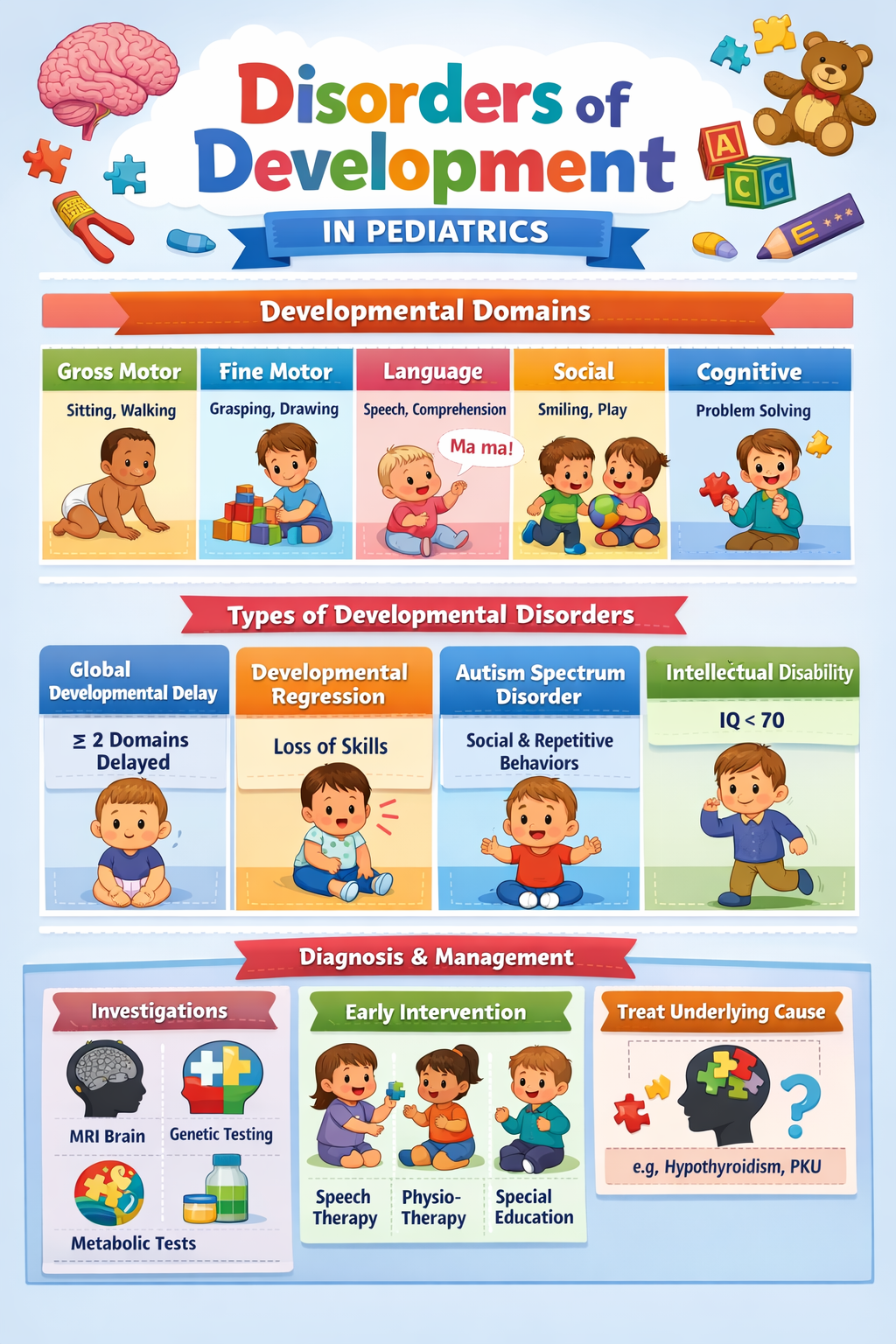
Illustration of Disorders of Development in Pediatrics: Developmental Delay, Autism, GDD Diagnosis and Management symptoms

Medical Disclaimer: This is educational content only, not medical advice. Consult a licensed healthcare provider for diagnosis/treatment. Information based on sources like WHO/CDC guidelines (last reviewed: 2026-02-13).

About the Author: Dr. Dinesh, MBBS, is a qualified medical doctor with over [2 years – add your experience] of experience in general medicine As the owner and lead content creator of LearnWithTest.pro, Dr. Dinesh ensures all articles are based on evidence-based guidelines from sources like WHO, CDC, and peer-reviewed journals. This content is for educational purposes only and not a substitute for professional medical advice.

Contact Details: For inquiries or collaborations, reach out at:

All content is reviewed for accuracy and updated regularly (last review: January 10, 2026). We prioritize trustworthiness by citing reliable sources and adhering to medical ethics.

Frequently Asked Questions

What are disorders of development in pediatrics?

Disorders of development are conditions in which a child fails to achieve expected developmental milestones in one or more domains such as gross motor, fine motor, language, social, or cognitive development.

What is the difference between developmental delay and developmental regression?

Developmental delay means a child is slower than expected in achieving milestones, whereas developmental regression refers to loss of previously acquired skills and is always abnormal.

What is global developmental delay (GDD)?

Global developmental delay is defined as significant delay in two or more developmental domains (motor, language, cognitive, social, or adaptive skills) in children under 5 years.

What are common causes of developmental delay?

Common causes include genetic syndromes (Down syndrome, Fragile X), congenital infections (TORCH), birth asphyxia, prematurity, metabolic disorders, CNS infections, malnutrition, and environmental deprivation.

What are red flag signs of developmental delay?

Red flags include no social smile by 3 months, not sitting by 9 months, not walking by 18 months, no single words by 16 months, no two-word phrases by 2 years, and any developmental regression.

How is developmental delay evaluated clinically?

Evaluation includes detailed prenatal, perinatal, and developmental history, milestone assessment, physical and neurological examination, screening tools, and targeted investigations.

Which screening tools are used for developmental disorders?

Common tools include Denver Developmental Screening Test (DDST), Ages and Stages Questionnaire (ASQ), and M-CHAT for autism screening.

When is MRI brain indicated in a child with developmental delay?

MRI is indicated when there is developmental regression, seizures, abnormal head size, focal neurological signs, or suspicion of structural brain abnormalities.

What is the most common cause of isolated speech delay?

Hearing impairment is one of the most common and reversible causes of isolated speech delay, so hearing assessment is essential.

How does autism spectrum disorder differ from intellectual disability?

Autism is characterized by impaired social communication and repetitive behaviors, while intellectual disability involves global cognitive impairment with deficits in adaptive functioning.

What investigations are essential in global developmental delay?

Key investigations include hearing and vision testing, thyroid function tests, genetic testing (chromosomal microarray, Fragile X), and metabolic screening when regression is present.

What is the role of early intervention in developmental disorders?

Early intervention with physiotherapy, occupational therapy, speech therapy, and special education significantly improves developmental outcomes and quality of life.

Can developmental delay be reversible?

Some causes are reversible, such as congenital hypothyroidism or hearing impairment, if treated early, while genetic and neurodegenerative causes are usually not reversible.

What is the management approach for autism spectrum disorder?

Management includes behavioral therapies such as Applied Behavior Analysis (ABA), structured educational support, speech therapy, and medications like risperidone for severe aggression if needed.

What are the key principles in managing developmental disorders?

Key principles include early identification, multidisciplinary intervention, treatment of underlying causes, family counseling, and long-term developmental support.

MCQ Test - Disorders of Development in Pediatrics: Developmental Delay, Autism, GDD Diagnosis and Management

Progress:
0/15
Time: 00:00

1 A 2-year-old boy is brought because he cannot walk independently, speaks only meaningless sounds, and does not play socially with other children. Examination shows no focal neurological deficits but milestones are delayed in multiple domains. What is the most appropriate diagnosis?

Explanation:

Delay in two or more developmental domains (motor, language, social, cognitive) before age 5 is defined as global developmental delay.

2 A 3-year-old girl had normal development until 18 months, after which she lost speech, developed repetitive hand-wringing movements, and has progressive microcephaly. Which disorder best explains this presentation?

Explanation:

Rett syndrome is characterized by developmental regression, loss of speech, stereotypic hand movements, and acquired microcephaly, mainly in girls.

3 A 4-year-old boy has poor eye contact, does not respond to his name, shows repetitive spinning behaviors, and has delayed speech. His hearing test is normal. What is the most likely diagnosis?

Explanation:

Core features of autism include impaired social communication and restricted repetitive behaviors with normal hearing.

4 A 9-month-old infant is unable to sit without support. Examination reveals increased tone in lower limbs and scissoring posture. Pregnancy was complicated by prematurity. What is the most likely cause?

Explanation:

Spasticity, scissoring, and motor delay in a premature infant suggest spastic cerebral palsy.

5 A 2-year-old child presents with speech delay. Parents report the child does not respond to loud sounds. Otoacoustic emissions are abnormal. What is the most appropriate next step?

Explanation:

Hearing impairment is a common reversible cause of speech delay and requires urgent rehabilitation.

6 A newborn screening test shows elevated TSH. At 6 months, the infant has lethargy, hypotonia, and delayed milestones. What is the most critical treatment?

Explanation:

Congenital hypothyroidism causes preventable intellectual disability if not treated early with levothyroxine.

7 A 5-year-old boy has IQ of 55, significant delay since infancy, and poor adaptive functioning in daily activities. What is the most appropriate diagnosis?

Explanation:

IQ <70 with impaired adaptive functioning and onset in childhood defines intellectual disability.

8 A 15-month-old infant has delayed walking. Head circumference is rapidly increasing and bulging fontanelle is present. What is the next best investigation?

Explanation:

Macrocephaly with signs of raised intracranial pressure requires urgent neuroimaging to exclude hydrocephalus or mass.

9 A child with global developmental delay has dysmorphic facial features, hypotonia, and a single palmar crease. What is the most likely genetic condition?

Explanation:

Down syndrome presents with characteristic dysmorphism, hypotonia, and developmental delay.

10 A child develops developmental regression, vomiting, seizures, and elevated serum ammonia. Which underlying disorder is most likely?

Explanation:

Hyperammonemia with regression suggests an inborn error of metabolism such as a urea cycle disorder.

11 A 2-year-old boy shows no pointing, no joint attention, prefers lining up toys, and has limited social interaction. Which developmental domain is primarily impaired?

Explanation:

Lack of joint attention and impaired reciprocity are key deficits in autism spectrum disorder.

12 A premature infant with history of intraventricular hemorrhage now presents with delayed milestones and increased tone in all limbs. What is the most likely etiology?

Explanation:

Prematurity with IVH is a major risk factor for cerebral palsy and developmental delay.

13 A 6-year-old child has normal intelligence but persistent difficulty reading, spelling, and academic underachievement despite adequate schooling. What is the most likely diagnosis?

Explanation:

Specific learning disorder causes academic impairment despite normal IQ and good teaching.

14 A 4-year-old child presents with regression, ataxia, and progressive vision loss. MRI shows diffuse white matter degeneration consistent with leukodystrophy. What type of disorder is this?

Explanation:

Leukodystrophies are progressive neurodegenerative disorders causing regression and loss of skills.

15 A child with autism develops severe irritability, aggression, and self-injurious behavior interfering with therapy. Which medication is most appropriate for symptomatic control?

Explanation:

Risperidone is approved for irritability and aggression in children with autism spectrum disorder.

Test Results

0%
0/15
0
Correct Answers
0
Wrong Answers
00:00
Time Taken
0
Skipped
View Exam Mode MCQs (1770965181-index-11-.html)

Related Articles

Comments