This article is being expanded for more depth. Check back soon!

Neonatal Resuscitation Guide for Newborn Emergency Care
Author: Medical Editorial Team – Board-certified physicians with 10+ years in emergency medicine. Learn more.

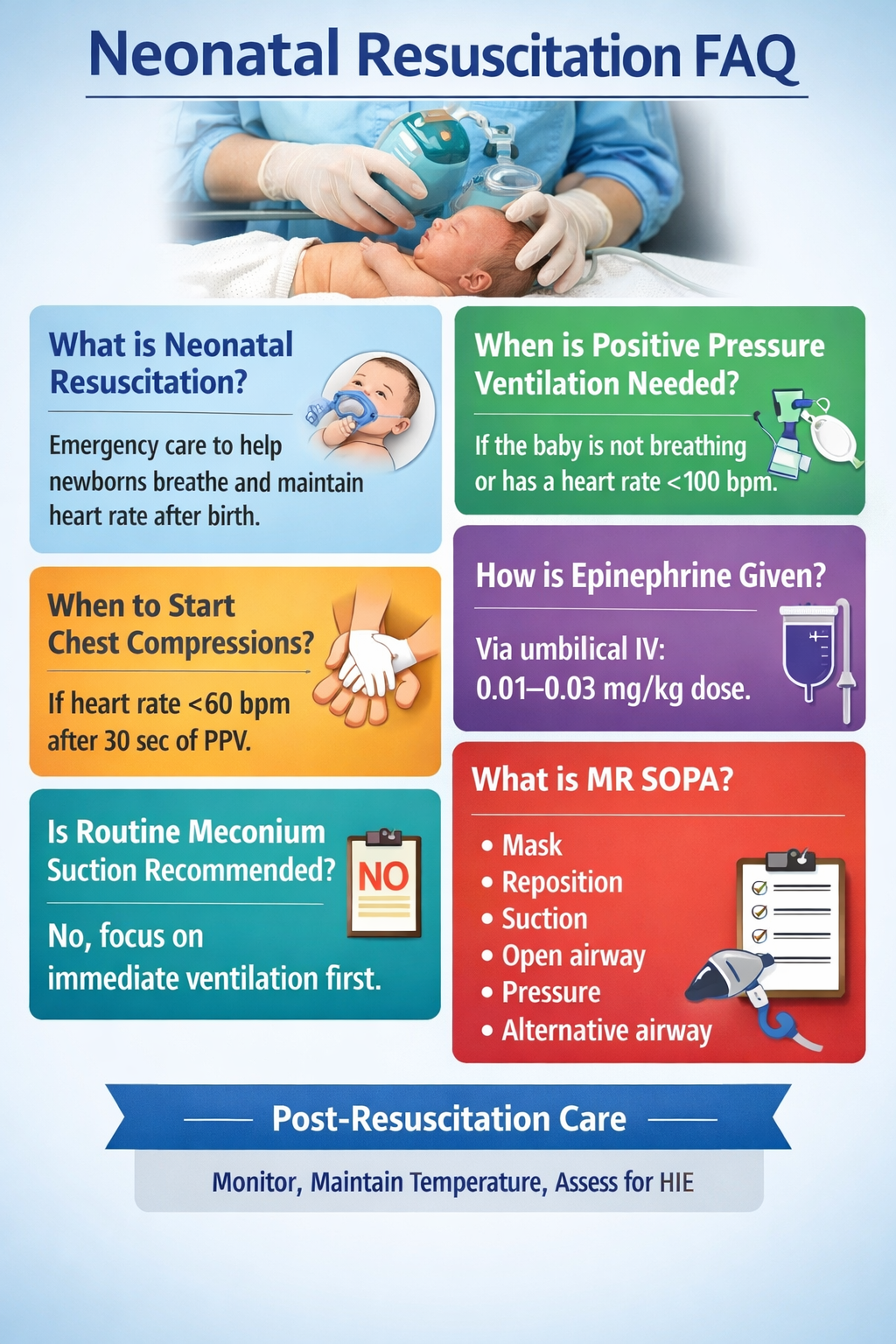
Illustration of Neonatal Resuscitation Guide for Newborn Emergency Care symptoms

Medical Disclaimer: This is educational content only, not medical advice. Consult a licensed healthcare provider for diagnosis/treatment. Information based on sources like WHO/CDC guidelines (last reviewed: 2026-02-13).

About the Author: Dr. Dinesh, MBBS, is a qualified medical doctor with over [2 years – add your experience] of experience in general medicine As the owner and lead content creator of LearnWithTest.pro, Dr. Dinesh ensures all articles are based on evidence-based guidelines from sources like WHO, CDC, and peer-reviewed journals. This content is for educational purposes only and not a substitute for professional medical advice.

Contact Details: For inquiries or collaborations, reach out at:

All content is reviewed for accuracy and updated regularly (last review: January 10, 2026). We prioritize trustworthiness by citing reliable sources and adhering to medical ethics.

Frequently Asked Questions

What is neonatal resuscitation?

Neonatal resuscitation is a set of immediate interventions provided to a newborn after birth to establish effective breathing, adequate heart rate, and proper oxygenation when normal transition fails.

How many newborns require resuscitation at birth?

About 10% of newborns require some assistance at birth, while approximately 1% need extensive resuscitation including chest compressions or medications.

What is the most important step in neonatal resuscitation?

Effective ventilation is the most critical step, as most neonatal cardiac compromise is secondary to inadequate oxygenation and ventilation.

When should positive pressure ventilation be started in a newborn?

Positive pressure ventilation should be started if the newborn is apneic, gasping, or has a heart rate less than 100 beats per minute after initial stabilization.

What heart rate indicates the need for chest compressions in neonatal resuscitation?

Chest compressions are indicated when the heart rate remains below 60 beats per minute despite at least 30 seconds of effective positive pressure ventilation.

What is the correct compression-to-ventilation ratio in neonatal CPR?

The recommended ratio is 3 compressions to 1 ventilation, resulting in 90 compressions and 30 breaths per minute.

When is epinephrine indicated during neonatal resuscitation?

Epinephrine is indicated if the heart rate remains below 60 beats per minute despite effective ventilation and coordinated chest compressions.

What is the preferred route for epinephrine administration in newborns?

The preferred route is intravenous administration via an umbilical venous catheter, as it provides the fastest and most reliable effect.

What oxygen concentration should be used initially for term newborn resuscitation?

Term newborns should be started on room air (21% oxygen), with oxygen concentration titrated based on pulse oximetry targets.

How does neonatal resuscitation differ in preterm infants?

Preterm infants require careful temperature control, lower initial oxygen concentration (21–30%), gentle ventilation strategies, and may benefit from early CPAP.

Is routine suctioning recommended for babies born through meconium-stained amniotic fluid?

No, routine suctioning is not recommended. Ventilation should be prioritized unless there is clear airway obstruction.

What is MR SOPA in neonatal resuscitation?

MR SOPA is a sequence of ventilation corrective steps: Mask adjustment, Reposition airway, Suction mouth and nose, Open mouth, Pressure increase, and Alternative airway.

When should volume expansion be given during neonatal resuscitation?

Volume expansion is given when there is suspected hypovolemia due to blood loss, such as placental abruption or cord hemorrhage.

What is the normal oxygen saturation range in the first minute of life?

Normal oxygen saturation at 1 minute of life is approximately 60–65%, gradually increasing over the first 10 minutes.

What post-resuscitation care is required after successful neonatal resuscitation?

Post-resuscitation care includes temperature control, glucose monitoring, cardiorespiratory monitoring, NICU observation, and evaluation for hypoxic ischemic encephalopathy.

What is the role of therapeutic hypothermia after neonatal resuscitation?

Therapeutic hypothermia reduces brain injury and improves neurologic outcomes in eligible newborns with moderate to severe hypoxic ischemic encephalopathy.

What are the common complications of neonatal resuscitation?

Complications include hypoxic ischemic encephalopathy, pneumothorax, intracranial hemorrhage, pulmonary hemorrhage, and long-term neurodevelopmental impairment.

Why is chest compression rate lower in newborns compared to adults?

Neonatal cardiac compromise is primarily due to respiratory failure, so ventilation is emphasized more than compressions.

How long should resuscitation be continued in a newborn with no heart rate?

Prolonged absence of heart rate beyond 10 minutes despite optimal resuscitation is associated with very poor prognosis and requires individualized decision-making.

What equipment is essential for neonatal resuscitation at delivery?

Essential equipment includes a radiant warmer, suction device, bag-mask ventilator, oxygen source with blender, pulse oximeter, airway devices, and emergency medications.

MCQ Test - Neonatal Resuscitation Guide for Newborn Emergency Care

Progress:
0/15
Time: 00:00

1 A term newborn is delivered after prolonged labor with thick meconium-stained amniotic fluid. The baby is limp, apneic, and has a heart rate of 70 bpm. Initial steps of warming, drying, and stimulation have been completed. What is the most appropriate next step?

Explanation:

Ventilation is the priority in neonatal resuscitation. Routine suctioning is not recommended unless airway obstruction is suspected. PPV should be started when apnea or HR <100 bpm is present.

2 A newborn remains apneic with a heart rate of 90 bpm after 30 seconds of positive pressure ventilation. No visible chest rise is noted. What is the next best intervention?

Explanation:

If chest rise is absent, ventilation is ineffective. MR SOPA corrective steps must be performed before escalation to compressions or medications.

3 A newborn has a heart rate of 50 bpm despite 30 seconds of effective ventilation with good chest rise. What is the most appropriate next step?

Explanation:

Chest compressions are indicated when HR remains <60 bpm despite effective ventilation.

4 During neonatal CPR, the resuscitation team is performing compressions and ventilation. What is the recommended compression-to-ventilation ratio and total events per minute?

Explanation:

Neonatal CPR uses a 3:1 compression-to-ventilation ratio, achieving 90 compressions and 30 breaths per minute (120 total events).

5 A newborn’s heart rate remains 40 bpm after 60 seconds of effective ventilation and chest compressions. What is the next best step?

Explanation:

Epinephrine is indicated when HR remains <60 bpm despite adequate ventilation and compressions.

6 A newborn requires epinephrine during resuscitation. Which route is preferred due to fastest and most reliable delivery?

Explanation:

IV epinephrine via umbilical venous catheter is the preferred route. Endotracheal administration is less effective.

7 A newborn is given epinephrine via umbilical venous catheter. What is the correct recommended dose?

Explanation:

The recommended epinephrine dose is 0.01–0.03 mg/kg IV using 1:10,000 concentration.

8 A 28-week preterm infant is born with weak respiratory effort but heart rate is 130 bpm. What is the most appropriate initial respiratory support?

Explanation:

Preterm infants with spontaneous breathing and stable HR benefit from CPAP. Oxygen should be titrated carefully.

9 A newborn’s oxygen saturation is 62% at 1 minute of life, with HR 150 bpm and spontaneous respirations. What is the correct interpretation?

Explanation:

Normal SpO2 at 1 minute is around 60–65%, gradually rising over 10 minutes.

10 A newborn delivered after placental abruption is pale, hypotensive, with weak pulses despite ventilation. What additional therapy is most appropriate?

Explanation:

Volume expansion is indicated when hypovolemia from blood loss is suspected.

11 A newborn has congenital diaphragmatic hernia and severe respiratory distress at birth. What is the correct initial airway approach?

Explanation:

Bag-mask ventilation worsens gastric distension in diaphragmatic hernia. Immediate intubation is required.

12 A newborn is intubated during resuscitation. What is the most reliable rapid confirmation of correct tube placement?

Explanation:

Exhaled CO2 detection is the most reliable immediate confirmation of ET tube placement.

13 A newborn develops sudden deterioration during PPV with asymmetric chest movement and poor oxygenation. What complication should be suspected?

Explanation:

Pneumothorax is a life-threatening complication of ventilation causing sudden decompensation.

14 A newborn remains asystolic after 10 minutes of optimal resuscitation with no response. What is the major prognostic implication?

Explanation:

Prolonged asystole beyond 10 minutes is associated with very poor outcomes.

15 After successful resuscitation, a newborn is diagnosed with moderate hypoxic ischemic encephalopathy. Which therapy improves neurologic outcomes when started early?

Explanation:

Therapeutic hypothermia reduces brain injury and improves outcomes in moderate–severe HIE when initiated within the therapeutic window.

Test Results

0%
0/15
0
Correct Answers
0
Wrong Answers
00:00
Time Taken
0
Skipped
View Exam Mode MCQs (1770551622-index-1-.html)

Related Articles

Comments