This article is being expanded for more depth. Check back soon!

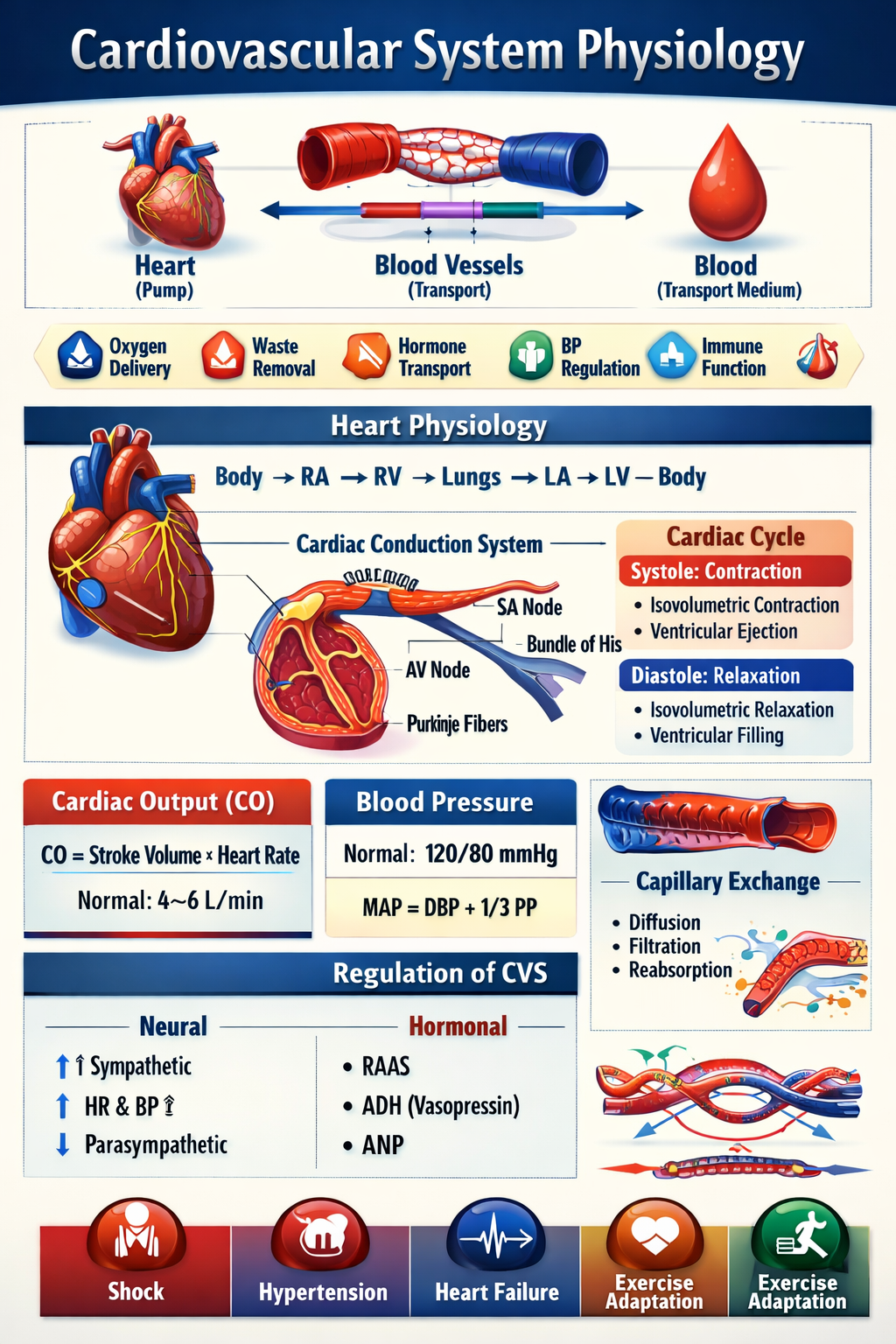
Cardiovascular System Physiology Complete Detailed Guide for Medical Students
Author: Medical Editorial Team – Board-certified physicians with 10+ years in emergency medicine. Learn more.

Illustration of Cardiovascular System Physiology Complete Detailed Guide for Medical Students symptoms

Medical Disclaimer: This is educational content only, not medical advice. Consult a licensed healthcare provider for diagnosis/treatment. Information based on sources like WHO/CDC guidelines (last reviewed: 2026-02-13).

About the Author: Dr. Dinesh, MBBS, is a qualified medical doctor with over [2 years – add your experience] of experience in general medicine As the owner and lead content creator of LearnWithTest.pro, Dr. Dinesh ensures all articles are based on evidence-based guidelines from sources like WHO, CDC, and peer-reviewed journals. This content is for educational purposes only and not a substitute for professional medical advice.

Contact Details: For inquiries or collaborations, reach out at:

All content is reviewed for accuracy and updated regularly (last review: January 10, 2026). We prioritize trustworthiness by citing reliable sources and adhering to medical ethics.

Frequently Asked Questions

What is the primary function of the cardiovascular system?

The cardiovascular system delivers oxygen and nutrients to tissues, removes carbon dioxide and waste products, maintains blood pressure, regulates temperature, and supports homeostasis.

What is cardiac output?

Cardiac output is the volume of blood pumped by the heart per minute and is calculated as stroke volume multiplied by heart rate.

What factors determine stroke volume?

Stroke volume is determined by preload, afterload, myocardial contractility, and ventricular compliance.

What is the Frank–Starling law of the heart?

The Frank–Starling law states that an increase in venous return leads to increased ventricular filling and stronger myocardial contraction, increasing stroke volume.

What controls heart rate physiologically?

Heart rate is controlled by the sinoatrial node and modulated by autonomic nervous system activity, hormones, and reflexes.

What is the function of the cardiac conduction system?

The cardiac conduction system generates and transmits electrical impulses to coordinate atrial and ventricular contractions.

What causes systolic and diastolic blood pressure?

Systolic pressure is produced by ventricular contraction, while diastolic pressure reflects arterial recoil and peripheral resistance.

What is mean arterial pressure (MAP)?

Mean arterial pressure is the average pressure in arteries during one cardiac cycle and ensures adequate organ perfusion.

What is the role of arterioles in circulation?

Arterioles are resistance vessels that regulate peripheral vascular resistance and control blood pressure.

How does the baroreceptor reflex regulate blood pressure?

Baroreceptors detect changes in arterial pressure and adjust heart rate and vascular tone via autonomic pathways.

What is the physiological basis of venous return?

Venous return depends on skeletal muscle pump, respiratory pump, venous valves, and sympathetic venoconstriction.

What is capillary exchange?

Capillary exchange involves diffusion, filtration, and reabsorption of fluids and solutes regulated by Starling forces.

What is coronary circulation?

Coronary circulation supplies oxygenated blood to the myocardium, primarily occurring during diastole.

How does exercise affect cardiovascular physiology?

Exercise increases heart rate, stroke volume, cardiac output, and redistributes blood flow to active muscles.

What is the physiological basis of shock?

Shock results from inadequate tissue perfusion due to reduced cardiac output, low blood volume, or decreased vascular resistance.

What causes pulse pressure widening?

Pulse pressure widens due to increased stroke volume or reduced arterial compliance, such as in aortic regurgitation.

What is the function of the pulmonary circulation?

Pulmonary circulation carries deoxygenated blood to the lungs for gas exchange and returns oxygenated blood to the heart.

What causes left ventricular hypertrophy?

Left ventricular hypertrophy occurs due to chronic pressure overload, such as hypertension or aortic stenosis.

How does aging affect cardiovascular physiology?

Aging reduces arterial elasticity, increases blood pressure, decreases cardiac reserve, and slows reflex responses.

Why is the refractory period important in cardiac muscle?

The refractory period prevents tetanic contraction and ensures rhythmic and coordinated cardiac contractions.

MCQ Test - Cardiovascular System Physiology Complete Detailed Guide for Medical Students

Progress:
0/15
Time: 00:00

1 A 64-year-old man with long-standing hypertension presents with exertional dyspnea. Echocardiography shows concentric left ventricular hypertrophy. Which physiological principle best explains this adaptation?

Explanation:

Chronic pressure overload increases ventricular wall stress, leading to concentric hypertrophy to normalize stress as described by Laplace’s law.

2 A patient with acute massive hemorrhage develops tachycardia and peripheral vasoconstriction. Which reflex is primarily responsible for these compensatory changes?

Explanation:

Reduced arterial pressure decreases baroreceptor firing, increasing sympathetic tone and heart rate.

3 A 58-year-old patient with heart failure has elevated left ventricular end-diastolic volume. Which physiological mechanism initially increases stroke volume despite reduced contractility?

Explanation:

Increased preload stretches myocardial fibers, increasing force of contraction via the Frank–Starling mechanism.

4 A patient with chronic obstructive pulmonary disease develops secondary pulmonary hypertension. Which physiological mechanism causes the rise in pulmonary vascular resistance?

Explanation:

Alveolar hypoxia induces pulmonary arteriolar vasoconstriction, increasing pulmonary resistance.

5 A patient experiences syncope immediately after standing from a lying position. Which physiological failure most likely caused this episode?

Explanation:

Orthostatic hypotension results from inadequate baroreceptor reflex compensation.

6 A patient in septic shock presents with warm extremities and hypotension despite high cardiac output. Which mediator is primarily responsible for systemic vasodilation?

Explanation:

Excess nitric oxide production leads to profound vasodilation and reduced systemic vascular resistance.

7 A patient with mitral stenosis develops progressive left atrial enlargement. Which hemodynamic change best explains this finding?

Explanation:

Mitral valve obstruction increases left atrial pressure, causing chamber dilation.

8 A patient with acute myocardial infarction develops cardiogenic shock. Which cardiovascular variable is most immediately reduced?

Explanation:

Loss of functional myocardium reduces contractility, leading to an immediate drop in stroke volume.

9 An endurance athlete has resting bradycardia with high stroke volume. Which physiological adaptation explains this?

Explanation:

Long-term endurance training enhances vagal tone and stroke volume, lowering resting heart rate.

10 A patient with severe chronic anemia develops high-output cardiac failure. Which physiological factor contributes most to increased cardiac output?

Explanation:

Low blood viscosity decreases vascular resistance, increasing cardiac output.

11 A patient with right heart failure presents with bilateral peripheral edema. Which Starling force is primarily responsible for fluid accumulation?

Explanation:

Venous congestion increases capillary hydrostatic pressure, promoting fluid filtration.

12 Following myocardial infarction, a patient develops ventricular tachycardia due to re-entry. Which electrophysiological abnormality is required for re-entry to occur?

Explanation:

Re-entry circuits require a unidirectional block and slow conduction to allow re-excitation.

13 A patient with aortic regurgitation has a widened pulse pressure. Which hemodynamic change explains this finding?

Explanation:

Increased stroke volume raises systolic pressure while diastolic pressure falls due to regurgitation.

14 A patient with pulmonary embolism develops acute right ventricular failure. Which physiological mechanism explains the right ventricular strain?

Explanation:

Pulmonary embolism acutely increases pulmonary arterial pressure, overloading the right ventricle.

15 A patient with constrictive pericarditis develops reduced cardiac output. Which physiological parameter is most directly impaired?

Explanation:

A rigid pericardium limits diastolic filling, reducing preload and cardiac output.

Test Results

0%
0/15
0
Correct Answers
0
Wrong Answers
00:00
Time Taken
0
Skipped
View Exam Mode MCQs (1769757781-index-2026-01-30T125045.496.html)

Related Articles

Comments